




Productivity Hacks for Busy Professionals

Mohamad-Ali Salloum, PharmD • October 11, 2025

Share

  • Slide title

    Write your caption here
    Button
  • Slide title

    Write your caption here
    Button
  • Slide title

    Write your caption here
    Button
  • Slide title

    Write your caption here
    Button

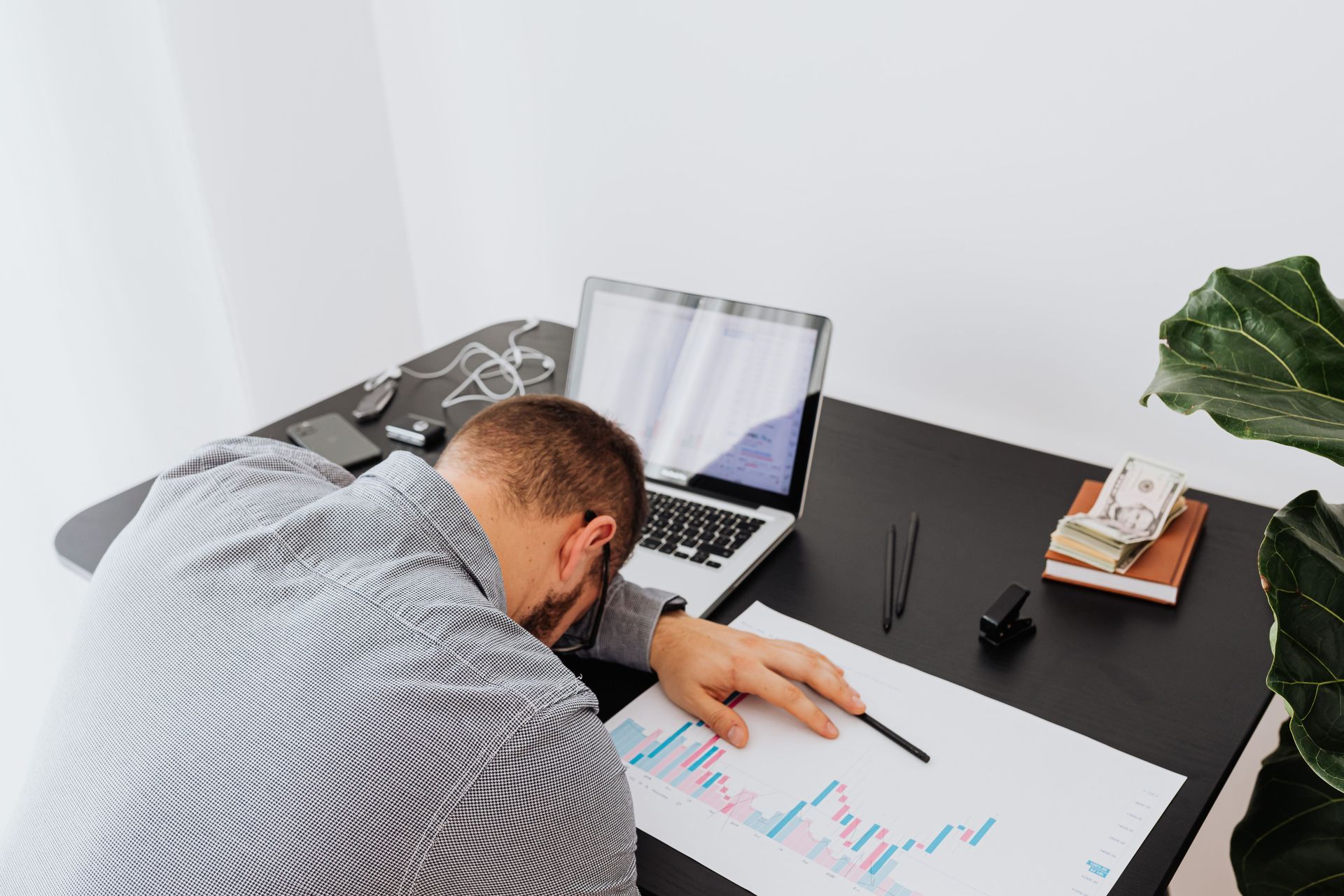
In today's fast-paced work environment, it's easy to feel overwhelmed and struggle to stay productive. As busy professionals, we're constantly juggling multiple tasks, attending meetings, and responding to emails. But don't worry! This blog post is packed with actionable productivity hacks designed to help you reclaim your time, focus on what matters, and achieve more without burning out.

1. Time Blocking: Your Secret Weapon

Time blocking involves scheduling specific blocks of time for particular tasks or activities. Instead of just having a to-do list, you allocate time slots in your calendar. This strategy helps you:

  • Prioritize tasks: By scheduling them, you ensure important tasks get attention.
  • Minimize distractions: Knowing what you should be working on at any given time reduces the temptation to multitask or get sidetracked.
  • Increase focus: Dedicated time blocks allow you to immerse yourself in a task and achieve a state of flow.

Actionable Tip: Start by identifying your most important tasks for the week and allocate specific time blocks for them in your calendar. Be realistic about how long each task will take, and don't forget to schedule breaks!

2. The Two-Minute Rule: Conquer Procrastination

The Two-Minute Rule states that if a task takes less than two minutes to complete, you should do it immediately. This simple rule can help you overcome procrastination and prevent small tasks from piling up.

  • Beat procrastination: Small tasks are easy to put off, but completing them immediately prevents them from becoming overwhelming.
  • Build momentum: Completing small tasks creates a sense of accomplishment and motivates you to tackle larger projects.
  • Clear your mental clutter: Getting small tasks out of the way frees up mental space for more important work.

Actionable Tip: Whenever a task pops up that takes less than two minutes, such as responding to a quick email or filing a document, do it right away instead of adding it to your to-do list.

3. Email Management: Tame the Inbox Beast

Emails can be a major time suck if not managed effectively. Implementing a few key strategies can help you regain control of your inbox and reduce email-related stress.

  • Schedule email time: Instead of constantly checking your email throughout the day, allocate specific times for processing emails.
  • Unsubscribe ruthlessly: Unsubscribe from any newsletters or email lists that you don't find valuable.
  • Use filters and folders: Set up filters and folders to automatically sort incoming emails and prioritize important messages.
  • Respond efficiently: Use canned responses for frequently asked questions and keep your emails concise and to the point.

Actionable Tip: Dedicate 15 minutes to unsubscribe from unnecessary email lists. You'll be surprised how much clutter you can eliminate!

4. Prioritize Ruthlessly: Focus on the Vital Few

Not all tasks are created equal. Some tasks have a much greater impact on your goals and objectives than others. Prioritizing ruthlessly involves identifying the vital few tasks that will move the needle and focusing on those above all else.

  • Apply the Pareto Principle: The 80/20 rule states that 80% of your results come from 20% of your efforts. Identify the 20% of tasks that generate the most significant results and prioritize them.
  • Use the Eisenhower Matrix: Categorize tasks into four quadrants: urgent/important, not urgent/important, urgent/not important, and not urgent/not important. Focus on tasks that are both urgent and important.

Actionable Tip: At the beginning of each day, identify your top three most important tasks. Focus on completing those tasks before moving on to anything else.

5. Automate and Delegate: Free Up Your Time

One of the most effective ways to boost your productivity is to automate repetitive tasks and delegate tasks that can be handled by others.

  • Automate repetitive tasks: Use technology to automate tasks such as scheduling social media posts, sending email reminders, and generating reports.
  • Delegate tasks effectively: Identify tasks that can be delegated to other team members or virtual assistants. Provide clear instructions and expectations to ensure tasks are completed successfully.

Actionable Tip: Identify one task that you can automate or delegate this week. Taking that one task off your plate can significantly improve your overall productivity.

Conclusion

By implementing these productivity hacks, you can transform the way you work, reclaim your time, and achieve more without sacrificing your well-being. Start small, be consistent, and track your progress. Remember, productivity is not about doing more; it's about doing what matters most. Embrace these strategies, and you'll be well on your way to becoming a highly effective and successful professional!


List of Services

    • Slide title

      Write your caption here
      Button
    • Slide title

      Write your caption here
      Button
    • Slide title

      Write your caption here
      Button
    • Slide title

      Write your caption here
      Button

    ABOUT THE AUTHOR

    Mohamad-Ali Salloum, PharmD

    Mohamad Ali Salloum LinkedIn Profile

    Mohamad-Ali Salloum is a Pharmacist and science writer. He loves simplifying science to the general public and healthcare students through words and illustrations. When he's not working, you can usually find him in the gym, reading a book, or learning a new skill.

    Share

    Recent articles:

    By Mohamad-Ali Salloum, PharmD February 10, 2026
    Learn 5 Whys and Fishbone (Ishikawa) for Root Cause Analysis in clinical research, with practical examples and an interactive quiz—no fluff, just clarity.
    By Mohamad-Ali Salloum, PharmD February 9, 2026
    A clear, practical guide to CAPA for Clinical Research Associates—covering corrective and preventive actions, real‑world scenarios, and an interactive quiz to reinforce learning.
    By Mohamad-Ali Salloum, PharmD February 5, 2026
    Boost your health with a simple 30‑minute morning walk backed by science—better heart health, mood, sleep, and energy.
    By Mohamad-Ali Salloum, PharmD February 3, 2026
    References: Gunes IB, Gunes A. Association Between Eyelid Twitching and Digital Screen Time, Uncorrected Refractive Error, Intraocular Pressure, and Blood Electrolyte Imbalances. Cureus . 2024;16(9):e69249. Available from: https://www.cureus.com/articles/291035-association-between-eyelid-twitching-and-digital-screen-time-uncorrected-refractive-error-intraocular-pressure-and-blood-electrolyte-imbalances Banik R, Miller NR. Chronic myokymia limited to the eyelid is a benign condition. J Neuroophthalmol . 2004;24(4):290–2. Available from: https://scholars.mssm.edu/en/publications/chronic-myokymia-limited-to-the-eyelid-is-a-benign-condition-2 Hallett M. Blepharospasm: recent advances. Neurology . 2002;59(11):1759–60. Available from: https://europepmc.org/abstract/MED/12434791 Defazio G, Livrea P. Epidemiology of primary blepharospasm. Mov Disord . 2002;17(1):7–12. Available from: https://europepmc.org/article/MED/11835433 Zeppieri M, Ameer MA, Jahngir MU, Patel BC. Meige Syndrome. In: StatPearls [Internet]. Treasure Island (FL): StatPearls Publishing; 2024. Available from: https://europepmc.org/article/MED/30020730 Zhang Y, Adamec I, Habek M. Superior oblique myokymia: a meta-analysis. J Ophthalmol . 2018;2018:7290547. Available from: https://doi.org/10.1155/2018/7290547 Costa J, Espírito-Santo C, Borges A, et al. Botulinum toxin type A therapy for blepharospasm. Cochrane Database Syst Rev . 2020;11:CD004900. Available from: https://www.cochranelibrary.com/cdsr/doi/10.1002/14651858.CD004900.pub2/abstract Khalkhali M. Topiramate-induced persistent eyelid myokymia. Case Rep Psychiatry . 2016;2016:7901085. Available from: https://europepmc.org/articles/PMC4886081/
    By Mohamad-Ali Salloum, PharmD February 1, 2026
    References: Sen A, Tai XY. Sleep duration and executive function in adults. Curr Neurol Neurosci Rep. 2023;23:801–813. [link.springer.com] Nature Research Intelligence. Sleep deprivation and cognitive performance. Nature Portfolio. 2023. Available from: https://www.nature.com/… [nature.com] Skourti E, Simos P, Zampetakis A, et al. Long-term associations between objective sleep and verbal memory performance. Front Neurosci. 2023;17:1265016. [frontiersin.org] Hauglund NL, Andersen M, Tokarska K, et al. Norepinephrine‑mediated slow vasomotion drives glymphatic clearance during sleep. Cell. 2025;188(3):606‑622.e17. [cell.com] Shirolapov IV, Zakharov AV, Smirnova DA, et al. The role of the glymphatic clearance system in sleep–wake interactions and neurodegeneration. Neurosci Behav Physiol. 2024;54:199–204. [link.springer.com] Kong Y, Yu B, Guan G, et al. Effects of sleep deprivation on sports performance: a systematic review and meta-analysis. Front Physiol. 2025;16:1544286. [frontiersin.org] Gong M, Sun M, Sun Y, et al. Effects of acute sleep deprivation on sporting performance in athletes. Nat Sci Sleep. 2024;16:—. [tandfonline.com] Dean B, Hartmann T, Wingfield G, et al. Sleep restriction between consecutive days of exercise impairs cycling performance. J Sleep Res. 2023;32(3):e13857. [onlinelibr....wiley.com] Mah CD, Mah KE, Kezirian EJ, Dement WC. The effects of sleep extension on athletic performance in collegiate basketball players. Sleep. 2011;34(7):943–950. [psycnet.apa.org] Cunha LA, Costa JA, Marques EA, et al. Impact of sleep interventions on athletic performance: a systematic review. Sports Med Open. 2023;9:58. [link.springer.com] Teece AR, Beaven CM, Argus CK, et al. Daytime naps improve afternoon power and perceptual measures in elite rugby union athletes. Sleep. 2023;46(12):zsad133. [academic.oup.com] Mesas AE, Núñez de Arenas-Arroyo S, Martinez-Vizcaino V, et al. Daytime napping and cognitive/physical sport performance: meta-analysis of RCTs. Br J Sports Med. 2023;57(7):417–27. [bjsm.bmj.com] Haines Roberts SS, Teo WP, Warmington SA. Effects of training and competition on the sleep of elite athletes. Br J Sports Med. 2019;53(8):513–522. [bjsm.bmj.com] Walsh NP, Halson SL, Sargent C, et al. Sleep and the athlete: 2021 expert consensus recommendations. Br J Sports Med. 2021;55(7):356–368. [bjsm.bmj.com] Janse van Rensburg DC, Fowler PM, Racinais S. Practical tips to manage travel fatigue and jet lag in athletes. Br J Sports Med. 2021;55(15):821–822. [bjsm.bmj.com] Watson NF, Badr MS, Belenky G, et al. Recommended amount of sleep for a healthy adult: AASM/SRS consensus statement. Sleep. 2015;38(6):843–844. [aasm.org] Centers for Disease Control and Prevention. FastStats: Sleep in adults. CDC. 2024. Available from: https://www.cdc.gov/sleep/… [cdc.gov]
    By Mohamad-Ali Salloum, PharmD January 30, 2026
    References: Gooley JJ, Chamberlain K, Smith KA, et al. Exposure to room light before bedtime suppresses melatonin onset and shortens melatonin duration in humans. J Clin Endocrinol Metab. 2011;96(3):E463‑E472. [academic.oup.com] Chang AM, Aeschbach D, Duffy JF, Czeisler CA. Evening use of light‑emitting eReaders negatively affects sleep, circadian timing, and next‑morning alertness. Proc Natl Acad Sci USA. 2015;112(4):1232‑1237. [hms.harvard.edu] Schöllhorn I, Stefani O, Lucas RJ, et al. Melanopic irradiance defines the impact of evening display light on sleep latency, melatonin and alertness. Commun Biol. 2023;6:1090. [nature.com] He J‑W, Tu Z‑H, Xiao L, Su T, Tang Y‑X. Effect of restricting bedtime mobile phone use on sleep, arousal, mood, and working memory: A randomized pilot trial. PLoS One. 2020;15(2):e0228756. [journals.plos.org] Hartstein LE, Mathew GM, Reichenberger DA, et al. The impact of screen use on sleep health across the lifespan: a National Sleep Foundation consensus statement. Sleep Health. 2024;10(4):373‑384. [sleephealt…ournal.org] Höhn C, Hahn MA, Gruber G, et al. Effects of evening smartphone use on sleep and declarative memory consolidation in male adolescents and young adults. Brain Commun. 2024;6(3):fcae173. Finucane E, O’Brien A, Treweek S, et al. Does reading a book in bed make a difference to sleep? The People’s Trial—an online, pragmatic randomized trial. Trials. 2021;22:873. [link.springer.com] Ong JC, Manber R, Segal Z, Xia Y, Shapiro S, Wyatt JK. A randomized controlled trial of mindfulness meditation for chronic insomnia. Sleep. 2014;37(9):1553‑1563. [academic.oup.com] , [mindfulchair.com] He X, Pan B, Ma N, et al. The association of screen time and the risk of sleep outcomes: a systematic review and meta‑analysis. Front Psychiatry. 2025;16:1640263. Shechter A, Quispe KA, Mizhquiri Barbecho JS, et al. Interventions to reduce short‑wavelength light at night and their effects on sleep: systematic review and meta‑analysis. SLEEP Advances. 2020;1(1):zpaa002. [academic.oup.com]
    By Mohamad-Ali Salloum, PharmD January 29, 2026
    References: Harkin B, Webb TL, Chang BPI, Prestwich A, Conner M, Kellar I, et al. Does monitoring goal progress promote goal attainment? A meta-analysis of the experimental evidence. Psychol Bull . 2016;142(2):198–229. Available from: https://www.apa.org/pubs/journals/releases/bul-bul0000025.pdf Compernolle S, DeSmet A, Poppe L, Crombez G, De Bourdeaudhuij I, Cardon G, et al. Effectiveness of interventions using self-monitoring to reduce sedentary behavior in adults: a systematic review and meta-analysis. Int J Behav Nutr Phys Act . 2019;16(1):63. Available from: https://link.springer.com/article/10.1186/s12966-019-0824-3 Patel ML, Brooks TL, Bennett GG. Consistent self‑monitoring in a commercial app‑based intervention for weight loss: results from a randomized trial. J Behav Med . 2020;43:391–401. Available from: https://link.springer.com/article/10.1007/s10865-019-00091-8 Patel ML, Hopkins CM, Brooks TL, Bennett GG. Comparing self-monitoring strategies for weight loss in a smartphone app: randomized controlled trial. JMIR Mhealth Uhealth . 2019;7(2):e12209. Available from: https://mhealth.jmir.org/2019/2/e12209/ Lally P, Van Jaarsveld CHM, Potts HWW, Wardle J. How are habits formed: Modelling habit formation in the real world. Eur J Soc Psychol . 2010;40(6):998–1009. Available from: https://repositorio.ispa.pt/bitstream/10400.12/3364/1/IJSP_998-1009.pdf Singh B, Murphy A, Maher C, Smith AE. Time to form a habit: A systematic review and meta-analysis of health behaviour habit formation and its determinants. Healthcare (Basel) . 2024;12(23):2488. Available from: https://www.mdpi.com/2227-9032/12/23/2488 Gollwitzer PM, Sheeran P. Implementation intentions and goal achievement: A meta‑analysis of effects and processes. In: Advances in Experimental Social Psychology . 2006;38:69–119. Available from: https://www.researchgate.net/publication/37367696 Adriaanse MA, Gollwitzer PM, De Ridder DTD, De Wit JBF, Kroese FM. Breaking habits with implementation intentions: A test of underlying processes. Pers Soc Psychol Bull . 2011;37(4):502–13. Available from: https://dspace.library.uu.nl/bitstream/handle/1874/380229/0146167211399102.pdf Palmer CA, Bower JL, Cho KW, Clementi MA, Lau S, Oosterhoff B, et al. Sleep loss and emotion: A systematic review and meta-analysis of over 50 years of experimental research. Psychol Bull . 2023;149(11):2314–48. Available from: https://www.apa.org/pubs/journals/releases/bul-bul0000410.pdf Kong Y, Yu B, Guan G, Wang Y, He H. Effects of sleep deprivation on sports performance and perceived exertion in athletes and non-athletes: a systematic review and meta-analysis. Front Physiol . 2025;16:1544286. Available from: https://www.frontiersin.org/journals/physiology/articles/10.3389/fphys.2025.1544286/full Tadros M, Newby JM, Li S, Werner‑Seidler A. Psychological treatments to improve sleep quality in university students: systematic review and meta-analysis. PLoS One . 2025;20(2):e0317125. Available from: https://journals.plos.org/plosone/article?id=10.1371/journal.pone.0317125 Locke EA, Latham GP. Building a practically useful theory of goal setting and task motivation: A 35‑year odyssey. Am Psychol . 2002;57(9):705–17. Available from: https://med.stanford.edu/content/dam/sm/s-spire/documents/PD.locke-and-latham-retrospective_Paper.pdf
    By Mohamad-Ali Salloum, PharmD January 16, 2026
    Reference: ACRP. “ICH E6(R2) to ICH E6(R3) Comparison.” (Jan 28, 2025) — terminology & essential records: PDF Clinical Trials Toolkit. “Summary of Key Changes in ICH E6(R3).” (Mar 25, 2025) — proportionality, QbD, safety reporting: Article PharmaEduCenter. “Key changes between ICH GCP E6 R3 and E6 R2.” (Aug 10, 2025) — structure & glossary: Blog CITI Program. “Navigating the Transition from ICH E6(R2) to ICH E6(R3).” (Mar 12, 2025) — consent & site practices: Blog IntuitionLabs. “ICH E6 (R3) Explained.” (Updated Jan 13, 2026) — rationale, data governance: Deep dive
    By Mohamad-Ali Salloum, PharmD January 16, 2026
    More Posts