








Mohamad-Ali Salloum is a Pharmacist and science writer. He loves simplifying science to the general public and healthcare students through words and illustrations. When he's not working, you can usually find him in the gym, reading a book, or learning a new skill.
Efficacy Vs Potency
Mohamad Ali Salloum, PharmD • March 6, 2022
Share
What are they and what do we need to know about these two concepts?
First let’s define them.
Efficacy is the ability of a drug to elicit a physiologic response when it interacts with a receptor.
Potency is the amount of drug needed to produce a certain response.
Two drugs can have the same effectiveness but different potencies.
Let’s suppose we have 2 dugs, Drug A and Drug B.
Drug A induces a 70% effect with only 3 molecules.
Drug B induces the same 70% effect with 6 molecules.
This means that both has the same efficacy, but Drug A is more potent than Drug B.
Knowing the difference in potency between drugs allows us to have several options for treating a patient and achieving the same clinical results.
Note that some drugs (let’s say Drug C) can’t reach the 70%, and when used in their maximal concentration they may reach 50% effect. In comparison with both Drugs A and B, Drug C is considered less effective.
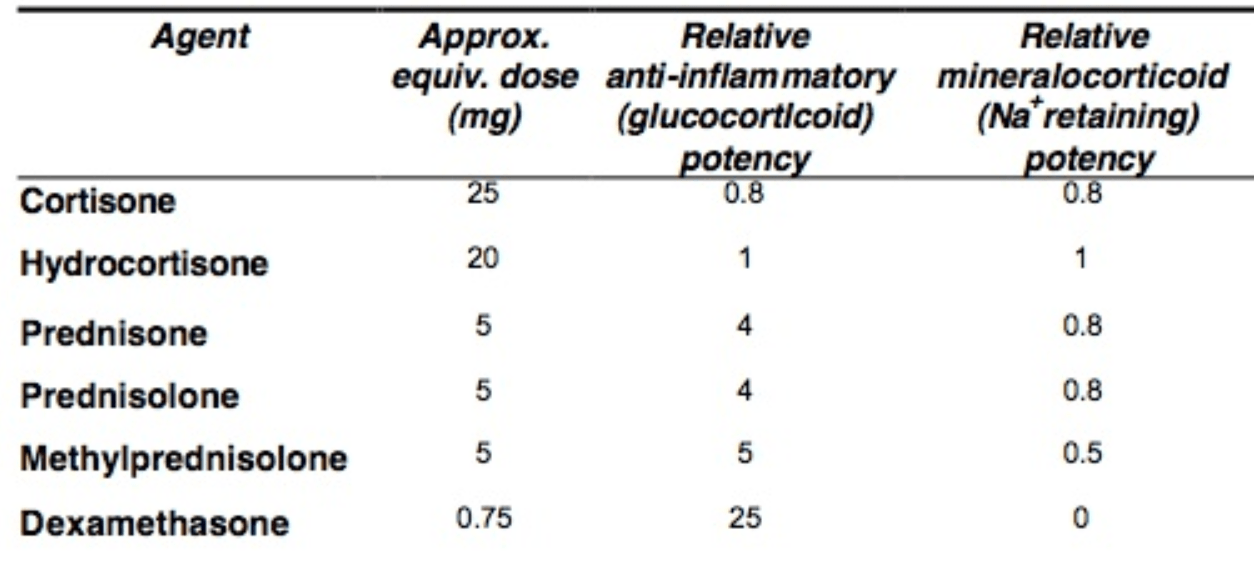
For example, when comparing the corticosteroids (as shown in the table below), we find that dexamethasone is the most potent in terms of anti-inflammatory effect. However, all of the below corticosteroids can achieve the same efficacy when used at the appropriate calculated doses.
You can also watch the illustrative video below for more understanding of the topic.
List of Services
ABOUT THE AUTHOR
Mohamad-Ali Salloum, PharmD

Share
Recent articles:

Discover how busy professionals can optimize their home office to support physical activity, reduce prolonged sitting, boost productivity, and improve long-term health using evidence-based strategies, movement-friendly workspace design, exercise snacks, walking meetings, and practical fitness habits.

Discover the neuroscience of impulse control and how mindfulness can help you pause before reacting. Learn how a small break can reduce impulsive decisions, strengthen self-control, and improve emotional regulation using evidence-based psychological strategies.

th, time management, and a strong identity beyond work. Discover practical strategies to prevent burnout and create sustainable long-term well-being.
Discover how boundaries, autonomy, workload control, and digital disconnection reduce stress, improve recovery, and prevent burnout.
Learn how to recover from burnout by rewiring your brain and nervous system. Discover science-backed techniques including breathwork, mindfulness, exercise, cognitive restructuring, psychological flexibility, and motivation rebuilding.
Learn the science of recovery, why scrolling isn't rest, how sleep repairs the brain, and why weekends alone don't cure burnout.
Burnout is more than stress. Learn how chronic burnout impacts mental health, heart health, immunity, cognition, and overall well-being.
Burnout doesn’t happen overnight. Learn the early warning signs—mental, physical, and behavioral—so you can catch burnout before it takes control.
Feeling exhausted but work isn’t the problem? Learn how life burnout happens and why your daily responsibilities may be draining you.
Think burnout is just stress? Discover how your thoughts, habits, and mindset may be silently driving your exhaustion.